miercuri, 14 februarie 2018

Ahopää-Tulipaikka-Rönkönlampi 25.11.2017

Am zile libere și atâtea dealuri (tunturi în finlandeză) prin zonă (Ahopää se numește hostelul în care stau și dealul din spate, dacă găsiți cu t la sfârșit, este la plural definind toată zona)... Cum aș putea sta în casă când e vreme faină afară? Nu contează că se apropie de ora 14.00 când plec și pe la 15.00 se întunecă! Ies prin spatele casei și urc pe poteca tematică Poropolku (poteca renului). Pe prima parte sunt câteva panouri explicative. De fapt eu aș fi vrut să urmez poteca și, după o poartă, pierd semnele. Altă dată găsesc semnele și urmez poteca tematică. Pe timp de iarnă poteca Poropolku este recomandată doar cu rachete, în timp ce mersul pe pârtiile de country skiing este interzis. Azi m-am revoltat când am aflat asta, abia când voi schia și eu voi înțelege de ce e interzis!

Renii sunt animale domesticite, adaptate la condițiile dure din mediul polar. Inițial erau sălbatici și au fost domesticiți, acum fiind crescuți în zone special delimitate (fiecare ren are proprietarul lui). Renii sunt liberi, marcați și pot circula peste tot, zonele proprietarilor fiind delimitate prin garduri și porți din lemn, cu foarte puțin metal. Printr-una din ele voi trece ceva mai încolo. 

Următorul panou povestește despre pui. Perioada de împerechere este în octombrie și puii se nasc la începutul lui mai. Puii sunt marcați în timpul verii pentru a ști exact cărui proprietar aparțin. Aș putea să vă spun mai multe aici și vă las să aflați când voi descrie întreaga potecă tematică. 

Cert este că după poartă poteca făcea la dreapta, eu nu am văzut indicatoarele subtile și am tot urcat în față printre dealurile Ahopää. Găsesc poteci prin zăpada de multe ori până la genunchi și ies undeva în dreapta potecii de country skiing. Așa faine și liniștite sunt locurile. Din când în când câte un schior sau câte o pală de vânt. Nimeni/nimic nu deranjează pe nimeni/nimic. Fac ceva poze și ajung la pista de schi. Pe margine cobor tot înainte spre Saariselkä. La prima intersecție, la Pieranvaara, văd pe panoul informativ o pistă de schi prin natură spre Rumakuru. Vă sună comic, nu? ”kuru” înseamnă ”canion” sau ”vale cu pereți apropiați”. Fac stânga spre Laanila pentru a mă întoarce prin Rönkönlampi. Până la intersecția cu Laaniselkä (adică cu pista luminată pentru country skiing) sunt mustrat de o schioare pentru mersul pe pista lor. Voi mai fi mustrat încă o dată înainte de Rönkönlampi (”no walking, no walking”). De fapt azi este un eveniment de schi, concurs cu probe la liber pentru a face mișcare și d-asta sunt mulți schiori pe piste!

I have a few free days and so many hills/fells (tunturi în Finnish) around (Ahopää is the name of the hostel I live in and the fell behind, if you find with t at the end it is plural and defines the zone)... How could I stay inside when it is good weather outside? It doesn't matter that it is close to 14.00 and it is getting dark at around 15.00! I go behind the house and go up on thematic trail Poropolku (reindeer trail). In the first part I see some info panels. I would like to follow the trail and, after a gate, I loose the marks. I find the marks another time and follow the thematic trail. In winter they recommend the trail Poropolku only with wintershoes and walking on the country skiing tracks is forbidden. Today I am angry about this, I will understand the interdiction when I will ski on the track!

Reindeers are domesticated animals, adapted to rough conditions in polar environment. Initially they were wild, now they are grown in delimited areas (each reindeer has his owner). Reindeers are free, marked and can walk everywhere, the owners' areas are separated by wooden fences and gates and a very few pieces of metal. I will pass one of them further on. 

The next panel is about calves. The mating time is in october and the babies are born at the beginning of may. The babies are marked in the midsummer to know the owner of them. I could tell you more here and I will let you know when I describe the entire thematic trail. 

The thematic trail was turning to right after the gate, I didn't see the small marks and walked up in front of me among Ahopää hills/fells. I find paths in the snow, sometimes up to knees, and reach a point on the right of the country skiing track. The places are so fine and quiet. A skier or a wind gust from time to time. Nobody/nothing annoys nobody/nothing. I take some pictures and reach the track. On one side I go down to Saariselkä. At the first cross, Pieranvaara, I see on the info panel that a nature track goes to Rumakuru. It sounds funny, right (”curu” means ”butt” in Romanian)? ”kuru” means ”canyon” or ”valley with close walls”. I turn left to Laanila to turn back through Rönkönlampi. Until the cross with Laaniselkä (the lighted country skiing track) I am argued by a skier for walking on the track. I will be argued once again before Rönkönlampi (”no walking, no walking”). It is a skiing contest today, contest with free choice tracks for making sport and this is why there are so many skiers on the tracks!


La 15.05 la Laaniselkä este deja noapte. Pe panou văd că am 2.1 kilometri până la Rönkönlampi și apoi cam încă un kilometru până la altă pistă luminată și apoi câteva sute de metri până la Kiilopääntie, drumul de mașină spre casă. Așa că la drum pe marginea pistei de ski. Pădurea este foarte faină, schiorii apar din când în când, trec un pod și cam peste jumătate de oră văd un marcaj spre locul de foc Tulipaikka. E o căsuță la dreapta cu o vatră metalică în interior, foc întreținut de cei care trec pe aici, lemne de rezervă și un mic gnom ce stă de pază. Aș vrea să vă închipuiți și voi senzația de a găsi un loc cald și așa curat în miezul iernii...

At 15.05 at Laaniselkä it is already night. On the panel I see that I have 2.1 kilometers to Rönkönlampi and about one kilometer more to another lighted track and a few hundred meters to Kiilopääntie, the road to home. So, walk on the margin of the ski track. Tho forest is very fine, skiers appear from time to time, I pass a bridge and after half an hour I see a sign on right to a fireplace called Tulipaikka. There is a small house on the right with a metallic fireplace inside, fire kept by the peope passing by, firewood and a small guarding gnome. I would you like to imagine the feeling of finding such a warm, clean place in the middle of winter...


După kilometrul amintit trec de o poartă de lemn cu benzi de plastic (pentru a speria renii să nu intre pe pista de schi), verific pe panoul denumit Ahopäännokat că sunt la intersecția celor două piste luminate, continui câteva sute de metri spre Kiilopääntie și, înainte de podul drumului, fac stânga pe drumul de snowmobile (câte drumuri diferite!). La stânga merg vreo doi kilometri pe el și ies la șosea. Mi se pare mai sigur! 

Mă opresc puțin la panoul care descrie poteca Ruija (Ruijanpolku), citesc ce scrie pe aici (inclusiv că regula tuturor oamenilor nu este valabilă în rezervațiile naturale). Aflăm de aici că Parcul Național Urho Kekkonnen, cunoscut și ca Koilliskaira, este una din cele mai mari zone de sălbăticie extensivă din Europa de Vest. (n.a. apăi să vină la noi...). Parcul a fost înființat în 1983 pentru a proteja pădurea originală, biotopurile de deal și mlaștină din nord-estul Finlandei. Este al doilea parc ca mărime din Finlanda. Cele mai cunoscute locuri sunt lacul Luirojärvi și dealul Sokosti (718 m), precum și râurile Suomujoki și Nuorttijoki.

Parcul este rai pentru fauna sălbatică finlandeză. Se estimează circa 20 de urși și 6 jderi în parc. Lupii pot fi semnalați în special spre limita estică. Vulturul auriu și vidra pot fi găsite în parc. Pădurile mari și mlaștinile de la sud de Saariselkä adăpostesc câteva specii de păsări de baltă, vulturi și bufnițe. Scoicile cu perle din râurile parcului sunt o specie pe cale de dispariție.

After the kilometer I told you about I pass a wooden gate with plastic bends (to frighten the reindeers for not entering the ski track), I see on the Ahopäännokat panel that I am at the cross of two lighted tracks, continue for a few hundreds meters to Kiilopääntie and, before the bridge of the road, I turn left on snowmobile track (how many different tracks!). I walk to the left about two kilometers and exit to the road. It seems safer!

I stop for a few minutes at the Ruija trail (Ruijanpolku) panel, read what it's written (including the idea that the allemannereglen is not available in natural reserves). We find that Urho Kekkonnen National Park, known as Koilliskaira, is one of the biggest extensive wilderness areas in West Europe (n.a. they should come to Romania...). The park was founded in 1983 to protect the original forest, the mire and fell nature in north-east of Finland. It is the second biggest park in Finland. The well-known sights are lake Luirojärvi and Sokosti fell (718 m), as well as Suomujoki and Nuorttijoki rivers.

The park is a heaven for Finnish wild fauna. It is estimated that there are about 20 bears and 6 wolverines in the park. The wolves are regular visitors, especially at the eastern border of the park. The golden eagle and the otter can be seen in the park The large forests and the mires south of Saariselkä host several species of wetland birds, hawks and owls. The pearl oysters from the rivers in the park are an endangered species.


După cum spuneam, câteva statui de gheață marchează competiția din zonă și ceva sărbători locale.

As I said, some ice statues mark the local competitin and some local celebrations.

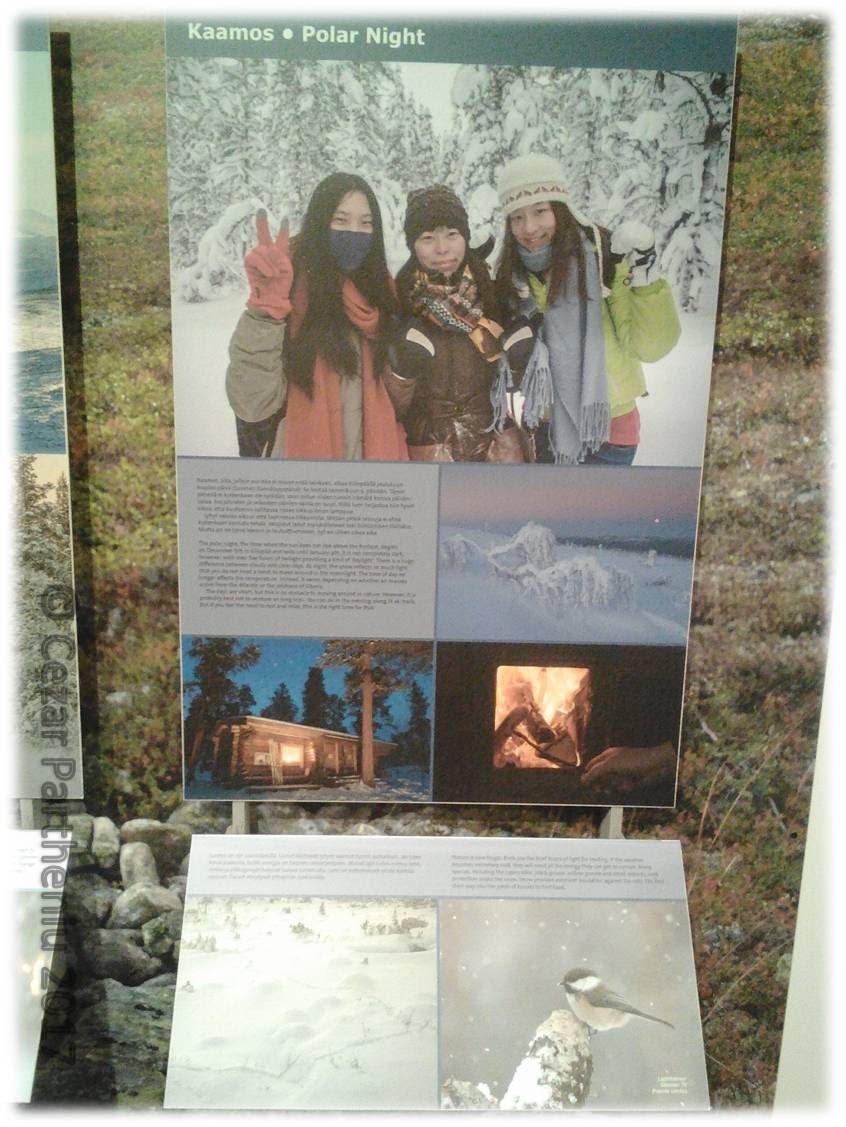
Spre final (fiindcă și așa am scris mult), doar vă las un panou cu unul din cele opt sezoane din Laponia. Opt? Citiți aici despre ce este vorba! 

Before ending (I wrote a lot, I know), I show you a panel with one of the eight seasons in Lapland. Eight? Read here about it!

http://www.lappi.fi/en/lapland/nature/eightseasons
Foc Kiilopää 24.11.2017

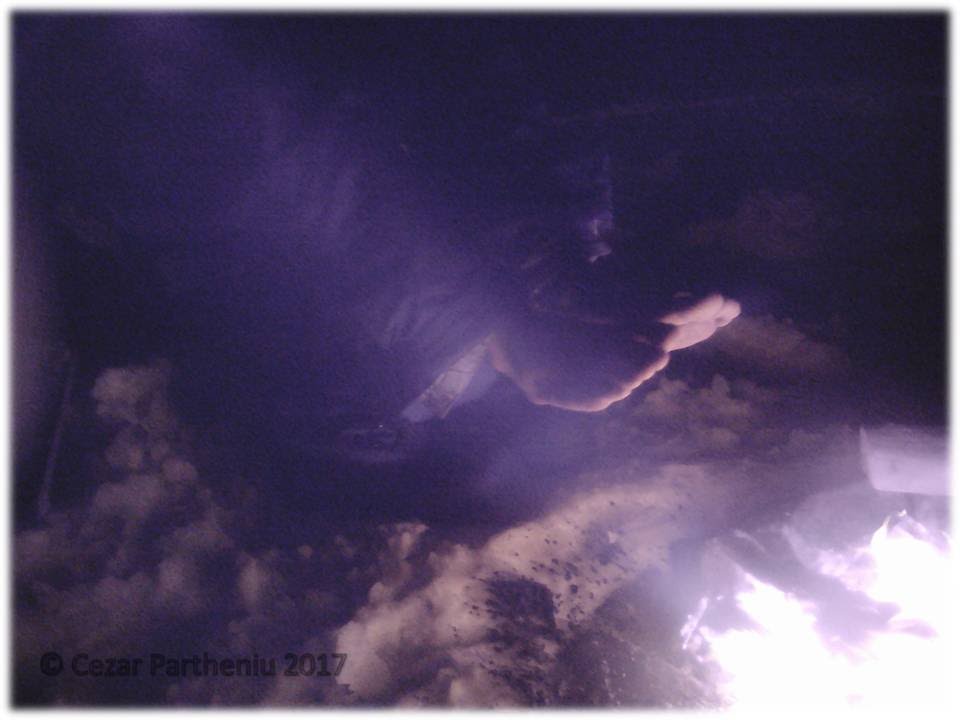
După o zi de muncă sunt invitat de colegii de cameră la foc afară, cu cârnați de ren (poron makkaroita) și bere. Ce plăcere mai mare să fie?

After a working day I am invited by my roommates at the fire outside, with reindeer sausages (poron makkaroita) and beer. Can you tell me a bigger pleasure?


Vasapolku 23.11.2017

Vasapolku (poteca vițelului) este cea mai scurtă potecă de trekking de pe lângă Kiilopää. Are 1.1 kilometri și te plimbă prin zonele joase de pe lângă râul Kiilopuro. Este o potecă tematică specifică pentru zona asta. Vă redau descrierea parcului național.

”Ce șoptește vântul? Care sunt evenimentele mari din viaţa micului leming Siiri? Copacii au barbă? Această potecă tematică pentru copiii și tineri la suflet începe de la poarta de început din Kiilopää. Panourile informative îl prezintă pe gnomul Elska din dealurile Ukselmpää, care vă ghidează în exporarea naturii antrenând toate cele cinci simțuri. 

Elska din Ukselmpää este un gnom care trăiește pe dealul Ukselmpää din Parcul Național Urho Kekkonnen. Elska urmărește evenimentele naturii. El înțelege limba animalelor și a păsărilor. Elska știe cum să citească scrierile secrete ascunse în pădure. El vrea să aibă grijă de natură. Dacă Elska găsește locuri murdare în natură, le curăță și le pune în ordine. 

Oricum Elska nu modifică ordinea naturală. Dacă zăpada grea sau în coroane a îndoit copacii în forme alandala, Elska nu le deformează. În mintea lui Elska formele alandala sunt așa cum trebuie să fie, în ordinea naturală. 

Elska trăiește la baza dealului lângă micul pârâu de munte Lumikurunoja. Elska bea apa curată și se spală în pârâu dimineața și seara. Poate adormi sub un copac ascultând poveștile puilor de veverițe. 

Elska le roagă pe păsări să îl trezească dimineața. Vara poate alege o grămadă de sunete o dată ce au sosit păsările migratoare. O ciocănitoare neagră îl trezește lovind trunchiul unui copac, un cocoș de munte râde, un ptarmigan orăcăie și păsările mici ciripesc. 

Elska are mulți prieteni, mari și mici. Furnicile sunt mereu ocupate, Kirsi, gaița siberiană îl vizitează des pe Elska și îi urează noroc. Este mereu nevoie de noroc și împărtășirea lui este una din sarcinile importante ale lui Kirsi și ale gaițelor siberiene. Câteodată, în mijlocul iernii, Elska poate adormi lângă ursul Kaisa. 

De-a lungul potecii gnomului de un kilometru pe Kiilopää,drumeților li se dau exerciții de observare a naturii, lucruri naturale în stilul lui Elska din Ukselmpää. Mergeți pe potecă, explorați natura conform ponturilor lui Elska, priviți, ascultați, încercați, întrebați-vă, mirosiți și câteodată gustați. ”

https://julkaisut.metsa.fi/assets/pdf/lp/Esitteet/ukk-vasapolku-eng.pdf

http://www.nationalparks.fi/en/urhokekkonennp/trails/vasapolkustory?inheritRedirect=true

Vasapolku (calf trail) is the shortest trekking trail around Kiilopää. It is 1.1 kilometers long and takes you through the low area around Kiilopuro brook. It is a thematic trail specific for this area I give you the description of the national park. 

”What is the wind whispering? What are the big things in the life of Siiri, a small lemming? Do trees grow a beard? This activity trail for children and the young at heart begins from the Kiilopää starting gate. The information boards present Elska the Gnome from the Ukselmapää Fell, who will guide your exploration of nature while engaging all five senses. 

Ukselmapään Elska is a gnome who lives on the Ukselmapää fell in the Urho Kekkonen National Park. Ukselmapää is the high fell after which the gnome was named. Ukselmapää is situated further north than Santa's Korvatunturi, which is also located in the Urho Kekkonen National Park. Elska follows the events of nature. He understands the language of animals and birds. Elska knows how to read secret writings hidden in the forest. He wants to take care of nature. If Elska finds very messy places in nature, he cleans them and puts them in order.

Elska will not interfere with the order of nature, however. If packed crown snow or heavy snow have broken the trees into topsy turvy shapes, Elska does not tamper with them. In Elska's mind, topsy turvy is the way it should be, the true order of nature.

Elska of Ukselmapää lives at the foot of the fell, by Lumikurunoja, a small mountain brook. Elska drinks the clear water and washes himself in the brook morning and night. He may fall asleep under a tree, listening to the bedtime stories of baby squirrels. 

Elska asks birds to wake him in the morning. In summer, he has a wider choice of alarm sounds once all the migratory birds have arrived. A black woodpecker wakes him up by drumming the side of a tree, a willow grouse laughs, a rock ptarmigan croaks and little birds chirp in their own voices.

Elska has many friends, big and small. Ants are always busy. Kirsi the Siberian jay visits Elska regularly to wish him luck. Luck is always needed and sharing it is one of the most important tasks of Kirsi and her fellow Siberian jays. Sometimes, in the middle of winter, Elska may sleep for a while beside Kaisa the bear. 

Along the 1 km-long gnome trail on Kiilopää, hikers are given nature observation exercises, natural stuff in the style of Elska of Ukselmapää. Walk the trail, explore nature in accordance with Elska's tips, watching, listening, probing, wondering, smelling and sometimes even tasting it.  ”

https://julkaisut.metsa.fi/assets/pdf/lp/Esitteet/ukk-vasapolku-eng.pdf

http://www.nationalparks.fi/en/urhokekkonennp/trails/vasapolkustory?inheritRedirect=true


marți, 13 februarie 2018

Zile de pregătire/Training days 23-24.11.2017

Cam asta vedem în pauzele de pregătire (puține, aici nu se pierde timpul)!

This is what we see in the training breaks (just a few, we don't lose time here)!


Prima zi de pregărtire/First training day 22.11.2017

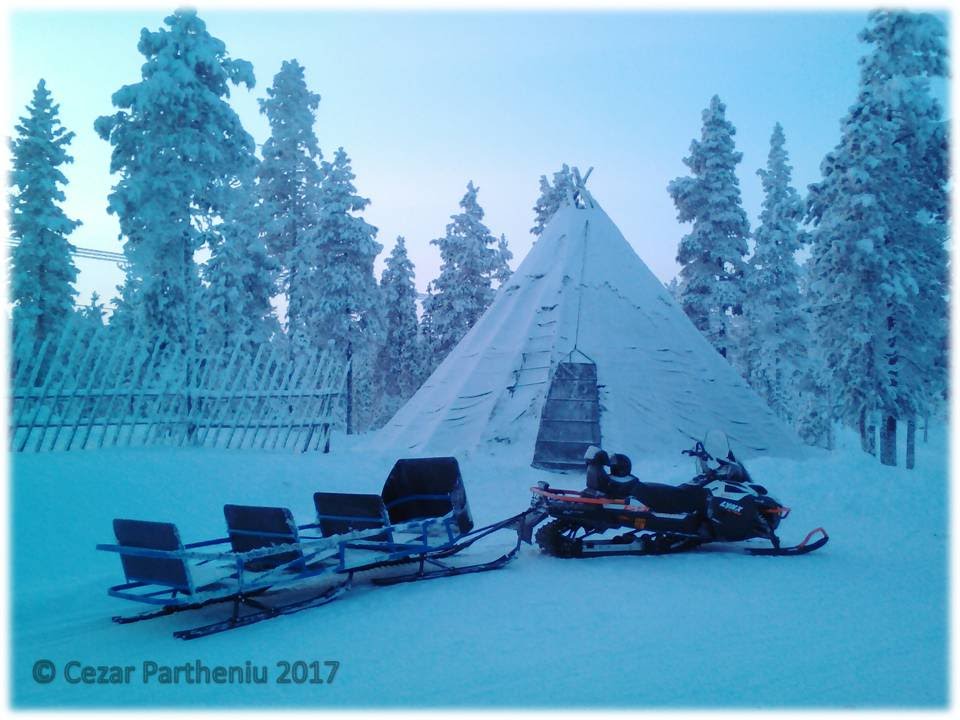
Prima zi de antrenament! Lucrez, alături de colegii mei, în Santa's Lapland. Este unul din parcurile de distracție tematice din Laponia. Fiecare e pregătit pentru anumite sarcini. Eu de exemplu am ca sarcină principală să conduc snowmobil cu sanie pentru turiștii care vin la noi și alte sarcini conexe în funcție de nevoi. Voi povesti despre ele când este cazul. Deocamdată facem ore de prim ajutor și apoi de pregătire pentru conducere și pentru a cunoaște locul în care vom lucra. În imagini vedeți ”Hi 5 bear”, locul de întâlnire pentru cursele cu husky și corturile kota specifice zonei pentru încălzire, clătite calde și suc de fructe fierbinte.

First training day! I work, next to my colleagues, at Santa's Lapland. It is one of the thematic fun parks in Lapland. Each of us is trained for some jobs. My main job is to drive snowmobile with sleigh for tourists and other jobs on request. I will tell you about them when needed. For now we have a first aid course and driving hours for knowing the machines and the place of working. You can see ”Hi 5 bear”, the meeting place for the husky rides and the kota tents, specific for the area, designed for warming up, hot pancakes and hot berry juice.


La final de zi scurtă mergem spre casă și cam așa se vede la orizont la ora 14.30!

At the end of a short day we go home and this is the light at the horizon at 14.30!
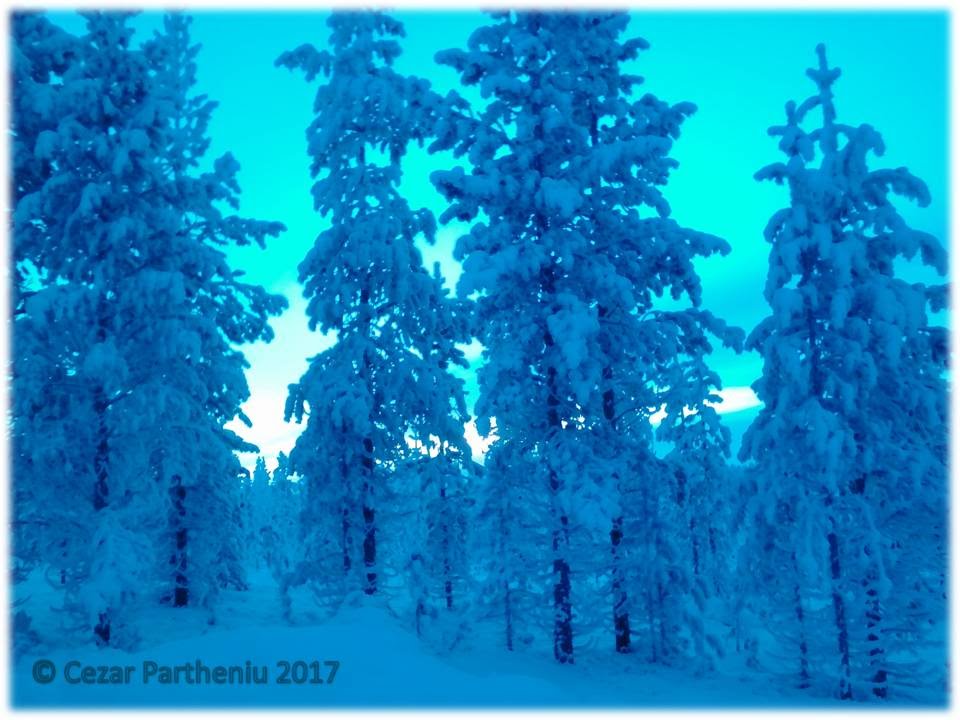
Cum se întunecă repede, văd pe cer o lună nouă, asemeni celei de la compania DreamWorks. Îl întreb pe Marcelo dacă vrea să mergem pe Kiilopää, cam până la totem sau unde putem vedea luna. ”Da, bineînțeles că mergem!” Urcăm echipați de ger, avem parte de o superbă lună nouă și de prezența Mariekei și, în plus, aurora boreală ne apare din nou pe cer. 

Aurora boreală este rezultatul apariției fotonilor când este activitate solară intensă și particule din soare lovesc straturile superioare ale atmosferei terestre. Culoarea este dată de gazele din atmosfera terestră atinse de particulele din atmosfera solară. Alături de activitatea solară intensă, alte condiții pentru a putea vedea aurora boreală sunt întunericul și cerul senin. Eu am mai observat și temperatura scăzută sub -15 grade, dar am înțeles că nu e musai! Unul din miturile aurorei boreale vine din Finlanda și spune că vulpea de foc/vulpea roșcată (firefox) alerga atât de repede pe zăpadă încât din coada ei săreau scântei în aer și formau aurora. De altfel în finlandeză aurora se numește ”revontulet” care înseamnă chiar ”vulpea de foc/vulpea roșcată”. O altă credință a poporului Sami este că aurora e creată din spuma apei stropite de balene (sursă: https://www.theaurorazone.com/about-the-aurora/aurora-legends). 

Sus, la totem, ne bucurăm de lună și de frumoasa auroră verde dinspre nord (dinspre Saariselkä) sau dinspre nord-est (dinspre parcul național). Frigul ne îngheață aparatele și degetele și nu ne pasă. Un astfel de spectacol nu poate fi ratat!

As it gets dark fast, I see a new moon on the sky, similar to the one of DreamWorks company. I ask Marcelo if he want to go to Kiilopää, to the totem to see the moon. ”Yes, of course we go!” We go up equipped for cold temperatures, we see a great new moon and the presence of Marieke and, more the northern lights appear again on the sky. 

The northern lights is the result of appearing of fotons when the solar activity is big and solar particles hit the up layers of the terestrial atmosphere. The color is given by the gases from terestrial atmosphere hit by the particles from solar atmosphere. Next to intense solar activity other conditions to see northern lights are the dark and the clear sky. I also observed the temperatures below -15 degrees, but this is not a must! One of northern lights myths comes from Finland and says that the firefox was running so fast across the snow that his tail caused sparks to fly into the night sky creating the aurora. Indeed in Sami language northern lights is called ”revontulet” which means ”firefox”. Another belief held by the Sami people is that northern lights is created by the spume of water ejected from whales (source: https://www.theaurorazone.com/about-the-aurora/aurora-legends). 

Up at the totem, we enjoy the moon and the beautiful lights from north (to Saariselkä) or north-east (to national park). The cold freezes our cameras and the fingers and we don't care. We can't miss such a show!


Coborâm la cazare, lăsăm aparatele și ne bucurăm de sauna cu fum. Asta fiindcă astăzi este ziua proprietarului și a oferit intrare gratis pentru toată lumea. Să vă explic despre ce este vorba. După ce îți faci duș (cald) ieși afară și intri într-o cameră unde a fost făcut foc din circa 2 metri cubi de lemn, a fost afumată toată camera și apoi aerisită și, până seara, cei care vin toarnă apă rece peste pietrele încinse de deasupra lemnului ars. Sunt cam 70-75 de grade în cameră și uneori foarte mulți aburi. Îți iei o placă de lemn pe care stai pe băncile aflate aproape de tavan și pentru a te răcori, ieși nu înainte de a spăla placa de lemn și intri afară într-un râu cu gheață pe margini (adică temperatură cu minus) (dacă vrei poți face asta dezbrăcat complet). Vă dați seama că după câteva secunde revii în camera fierbinte! De câteva ori m-am ”săpunit” cu zăpadă în loc de râu. Așa mai fac și finlandezii și chiar colega finlandeză Aada m-a felicitat pentru metoda practicată. Parcă am fi stat amândoi aici la saună cu orele... Nu doar noi, era plină sauna de localnici sau de colegi de-ai noștri!

We go down to accomodation, let the cameras and enjoy the smoke sauna. Because today is the owner's birthday and he offered free entrance for everybody. Let me tell you what it is about. After a (warm) shower you go out and enter in a room where they made the fire of about two cube meters of logs, the room was aired and, until evening, the ones who come pour cold water on the hot stones above the burnt logs. There are about 70-75 degrees in the room and a lot of steam. You take a wooden plate and stay on it on the benches close to the ceiling and, for cooling down, you wash the plate and go out in a river with ice on the shores (so it is with minus) (if you want you can do it completely naked). You easily imagine that after a few seconds you go back in the hot room! For a few times I ”washed” myself with snow instead of the river. So do the Finnish people sometimes and even my colleague Aada congtatulated me for the method. We could stayt here for hours... Not just us, all the locals or our colleagues!

luni, 12 februarie 2018

Kiilopaa 21.11.2017

Aseară am ajuns în Saariselkä, cea mai nordică stațiune de schi din uniunea europeană (aflată la 68°25.25′N, 27°25.03′E, are acest renume deși mai este în Suedia o mică stațiune de schi Riksgränsen aflată la 68°25′40″N 18°07′20″E) și de aici suntem repartizați de reprezentanții firmei la locurile de cazare. Unii dintre colegi stau chiar în stațiune, alții stau în Tievatupa și alții în Kiilopää. Eu s-a nimerit să stau în Kiilopää, cel mai îndepărtat loc de Saariselkä (15 kilometri). La început ni s-a părut incomod și mai apoi am văzut avantajele locului: loc liniștit și apropiat de natură (la marginea parcului național Urho Kekkonnen, al doilea ca mărime din Finlanda), nu avem wireless ceea ce ne face să interacționăm mai mult între noi (doar la recepție în altă clădire decât cea în care stăm), avem o saună la dispoziție gratis (ca chiriași în Kiilopää) și una cu plată (mai specială, mai tradițională) extrem de aproape, avem multe trasee (de trekking sau country skiing la dispoziție), avem cel mai înalt munte din regiune (Kiilopää 546 metri altitudine) accesibil la circa o oră de urcat (anticipez, am urcat de câteva ori în toată perioada). Singurul dezavantaj este că suntem primii care trebuie să se trezească la autocarul/minibus-ul/taxi-ul care ne duce la firmă (transport asigurat de ei)! E OK!

Astăzi avem prima întâlnire de cunoaștere a colegilor (unii cu alții, experiența anterioară, primele instrucțiuni) și ni se anunță programul pe zilele următoare. Deocamdată e lejer: avem câteva zile de pregătire și abia pe 30 noiembrie începem treaba propriu-zisă! Pe seară ne bucurăm de prima auroră boreală (în spatele casei) și de primul foc făcut pe zăpadă (doar la locul de foc prestabilit unde sunt saci cu lemne uscate într-o magazie simplă). Pentru Marcelo și Marieke (colegii mei de cameră) e un moment foarte fain: e prima dată când fac focul pe zăpadă! Sunt momente greu de descris și de uitat: cine se gândea că vom face focul afară, la temperaturi de -12...-15 grade, tocmai în mijlocul Laponiei, cu muzică și atmosferă atât de faină!

Yesterday evening we reached Saariselkä, the northernmost ski resort in european union (68°25.25′N, 27°25.03′E, it is known like this although there is in Sweden a small ski resort Riksgränsen at 68°25′40″N 18°07′20″E) and we are assigned by the company representants at the accomodation places. Some are staying in the resort, some at Tievatupa and some in Kiilopää. I was assigned to stay in Kiilopää, the farest place from Saariselkä (15 kilometers). At the beginning it felt unconfortable and then we saw the advantages of the place: quite place and close to nature (at the limit of Urho Kekkonnen National Park, the second as size in Finland), we don't have wireless and this makes us interact more (only at reception, in  another building that the one we live in), we have a free sauna (as renters in Kiilopää) and a payed one (special, traditional) really close, we have a lot of paths (trekking or country skiing), we have the highst fell around (Kiilopää 546 meters altitude) accesible at around one hour of walking (I anticipate, I walked up for a few times in the whole period). The only disadvantage is that we have to wake up earlier than our colleagues for the bus/mini-bus/taxi that takes us to the company (included transport)! It is OK!

Today we have the first info meeting (knowledge about others, previous experience, first instructions) and they tell us the program for the next days. It ie easy for the moment: a few training days and we start the job on 30th of November! In the evening we enjoy the first northern lights (behind the house) and the first fire made on snow (only at the fireplace where we have pre-prepared firewood in a simple store). For Marcelo and Marieke (my room-mates) it is a very fine moment: the first fire on snow! These are hard descriptable and unforgettable moments: who was thinking of making a fire outside, at -12...-15 degrees, in the middle of Lapland, with such a fine music and atmosphere!